
Traditions · The journal
What Is a Temazcal? Mesoamerican Roots and Questions for a First Visit
Explore the temazcal as a Mesoamerican steam-bath tradition, its cultural meaning, and practical questions about consent, access, and heat.
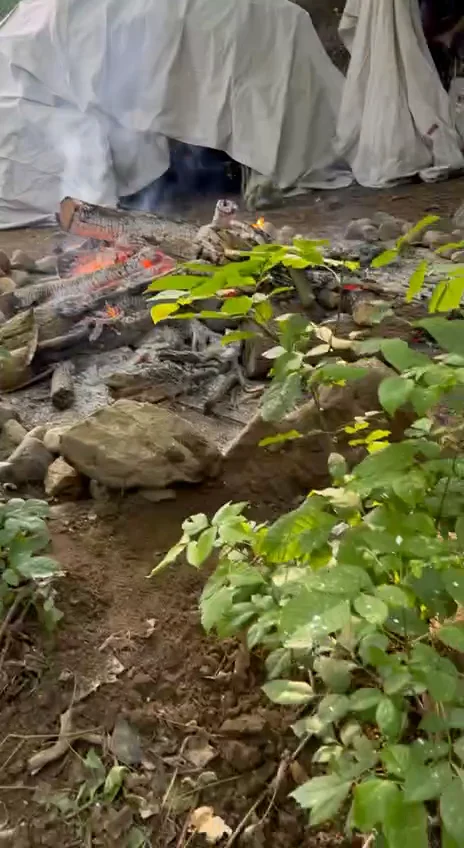
The house of steam
A temazcal is a Mesoamerican steam-bath tradition, not another name for Huachuma or ayahuasca. The word comes from the Nahuatl temazcalli. Mexico’s National Institute of Anthropology and History, INAH, describes it as the “house of steam”.
Heat and steam are central to the physical setting. In the Teotihuacan Valley account, they sit within a larger relationship among the space, local plant knowledge, ritual, and community memory. Calling it simply a hot room leaves much of that context out.
At the same time, a ceremonial description does not tell you how a particular gathering will operate. The tradition and the arrangements made by an individual host are separate things to understand.
A history connected to actual places
Temazcal history is not supported only by contemporary retreat descriptions. INAH documents the discovery of a pre-Hispanic temazcal in La Merced, in Mexico City’s historic center. The remains helped researchers locate Temazcaltitlan, a neighborhood identified in historical accounts of Tenochtitlan.
That is a specific archaeological finding. It connects the practice to the built environment of a particular community. It does not establish that every present-day structure, sequence, or explanation is identical to the one used there.
This distinction is useful when someone describes a gathering as “ancient.” Ask which elements are documented, which were learned from living teachers, and which have been adapted for the present setting. Adaptation can be named plainly; it does not need to be hidden behind a claim that nothing has changed.
Meaning is not the same as a medical outcome
INAH’s Teotihuacan Valley account describes architectural and ceremonial symbolism associated with the maternal womb and renewal. Those images help explain the meaning people give the experience within that account.
They should be read as cultural and spiritual language, not a guarantee of bodily cleansing, emotional transformation, or treatment. A person may find a symbol meaningful without having to claim that it produces a predictable medical result.
Likewise, the amount of heat someone tolerates is not a measure of respect, courage, or spiritual readiness. A visitor’s physical limits still matter inside a ceremonial setting.
Why the distinctions matter
A temazcal belongs in a conversation about Mesoamerican traditions. Huachuma’s Andean context and ayahuasca’s Amazonian contexts are different subjects. They may appear on the same contemporary website, but sharing a venue or an organizer does not give them a shared origin.
Nor should “sweat lodge” be treated as proof that all Indigenous heat-based traditions have the same teachings or permissions. Ask which specific practice the host means and who taught it. A resemblance in the physical setting is not a substitute for learning that history.
Our Temazcal page is an introduction to this subject. It should not be read as a description of a particular event’s facilities or safety arrangements.
Practical questions before attending
Clear practical questions can sit comfortably beside cultural respect:
- What teaching is being shared? Ask about the tradition, the teachers, and any adaptations made for this location.
- What does participation involve? Request a straightforward outline and ask which parts are optional. Ask whether observing without entering is possible; do not assume it is.
- Can someone leave immediately? Ask how the exit remains accessible and how a request to stop is handled without pressure or embarrassment.
- What is the physical environment? Ask about access paths, steps, seating, changing arrangements, privacy, and any smoke or scents.
- Who is responsible if someone becomes unwell? Ask about supervision, emergency access, and the plan for obtaining medical help.
- Who can answer health questions? A ceremonial host’s role is not automatically a clinical qualification.
These are questions to resolve before making plans, not matters to discover after entering.
Taking heat seriously
The CDC’s heat guidance explains that overheating can cause illness, that certain conditions and medicines increase vulnerability, and that medication changes should be discussed with a doctor. Its guidance concerns heat generally; it is not an endorsement or safety assessment of any temazcal.
If you have health or medication concerns, speak with a qualified clinician before considering heat exposure. Do not accept pressure to remain through distress or stop prescribed medicine. If someone becomes seriously unwell, seek emergency medical help rather than treating the symptoms as a required part of ceremony.
Begin with a conversation
You can contact Huachuma Moonlight with general questions about the tradition and what information would be needed before a visit. Keep private medical details out of an initial inquiry. Consult the calendar for published dates, and ask about practical arrangements for a specific gathering rather than assuming that a photograph establishes them.
Sources & further reading
This guide was created with AI assistance using the sources above. It provides educational context, not Oswal’s personal teachings or professional advice. Read our editorial approach or send a question or correction.