
The Andean path
Huachuma Ceremony
Prayer, presence, and a renewed relationship with the natural world. An introduction to the tradition of Grandfather Huachuma.
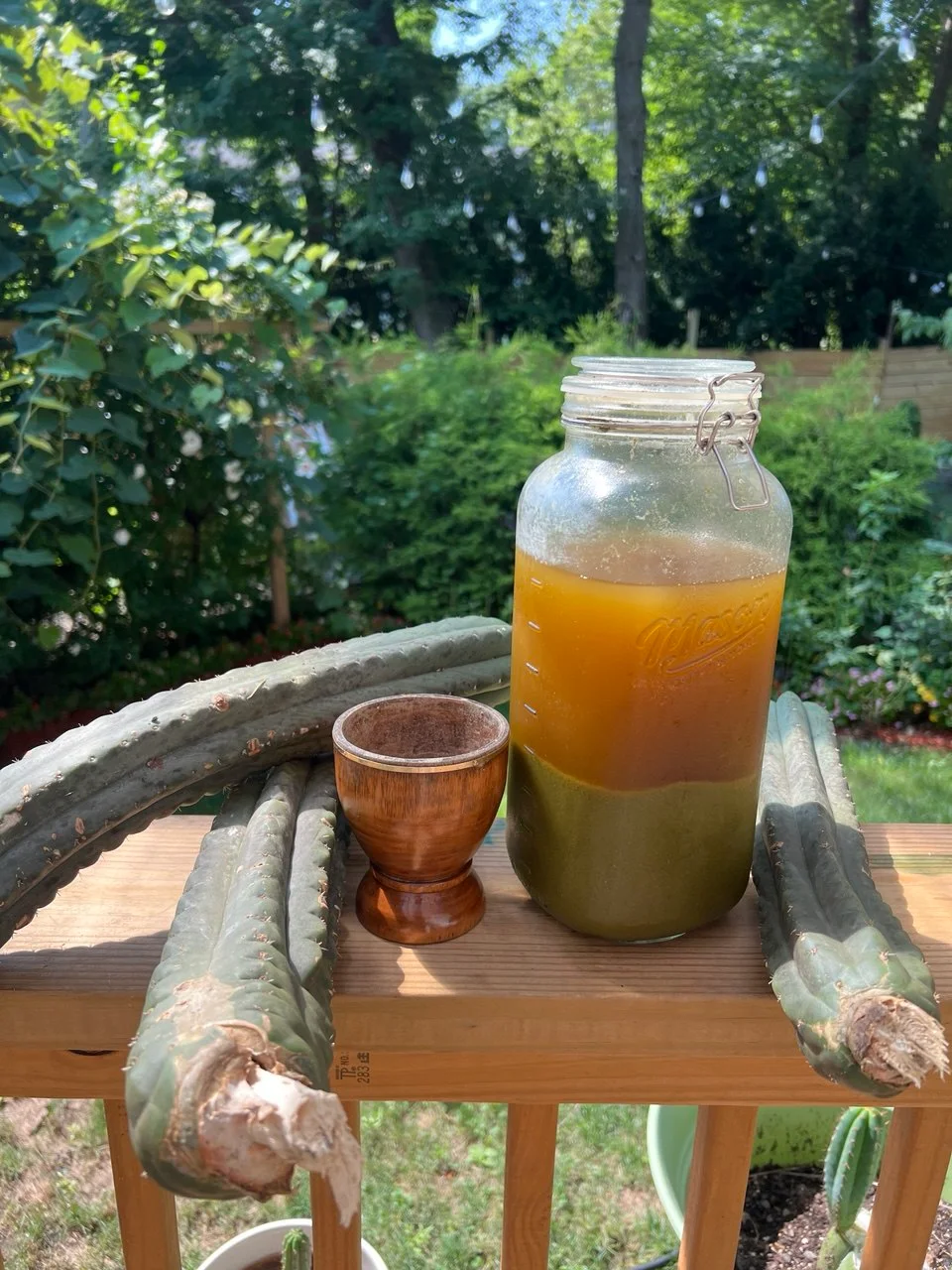
An Andean relationship
Huachuma, also written Wachuma and often known as San Pedro, is a cactus associated with ceremonial traditions of the Andes. The name “Grandfather Huachuma” expresses reverence: a way of relating to the plant as a teacher and to the natural world as something we belong to, rather than something apart from us.
Oswal comes from the Andes of Ecuador. Alongside Joanne and their family, he describes his work through prayer, gratitude, and relationship with the living Earth. This family’s perspective belongs within a much wider landscape of Andean traditions. Practices vary among communities and teachers; one account cannot speak for all of them.
Gratitude as an everyday practice
The cultural meaning of a ceremony is more than its most visible moment. Attention to the landscape, a spoken intention, and the way people listen to one another can all express the relationship at its center. Learning about Huachuma begins with that context rather than with expectations of a dramatic result.
Reciprocity brings the conversation back to ordinary life: how we care for the places that sustain us, how we treat our families, and what gratitude asks of us. You can explore these questions without deciding to participate in a ceremony. Curiosity, cultural respect, and clear personal boundaries can belong in the same conversation.
Cultural reading: Huachuma Moonlight’s earlier introduction to its traditions. Linked accounts reflect their authors’ perspectives; health claims are not endorsed here.
A note on care
Reverence does not remove risk.
Huachuma is psychoactive and can involve serious physical and psychological risks, including medication interactions. It is not suitable for everyone. Discuss personal health questions with a qualified clinician, and never stop or change prescribed medication for a ceremony without your prescribing clinician’s guidance. This introduction is not medical advice or an invitation to obtain or use a controlled substance.
Please do not send health histories or medication lists through this site, email, or social DMs.
A little more context
Common questions
Are Huachuma and Wachuma different traditions?
Huachuma and Wachuma are spelling variations of the same name. San Pedro is another commonly used name for the cactus. Names alone do not tell you a practitioner’s lineage, approach, or the details of a particular gathering.
Is Huachuma ceremony a form of medical care?
The information here concerns cultural and spiritual practice, not diagnosis or treatment. No health outcome is promised. A ceremonial experience is not a replacement for qualified medical or mental-health care.
Does a religious affiliation establish legal permission?
No. An organizational or religious affiliation does not by itself establish a legal exemption for an individual or an activity. Laws and individual circumstances differ; this website does not establish permission or provide legal advice.
Begin with a conversation.
Ask Oswal and Joanne about the cultural context of Huachuma, their family’s perspective, or the practical questions you would want answered before making any decision.