
Traditions · The journal
What Is Huachuma? The Cactus, Its Roots, and Respectful Questions
Learn about Huachuma, also called San Pedro, its Andean context, what botanical and museum sources show, and questions to ask a practitioner.
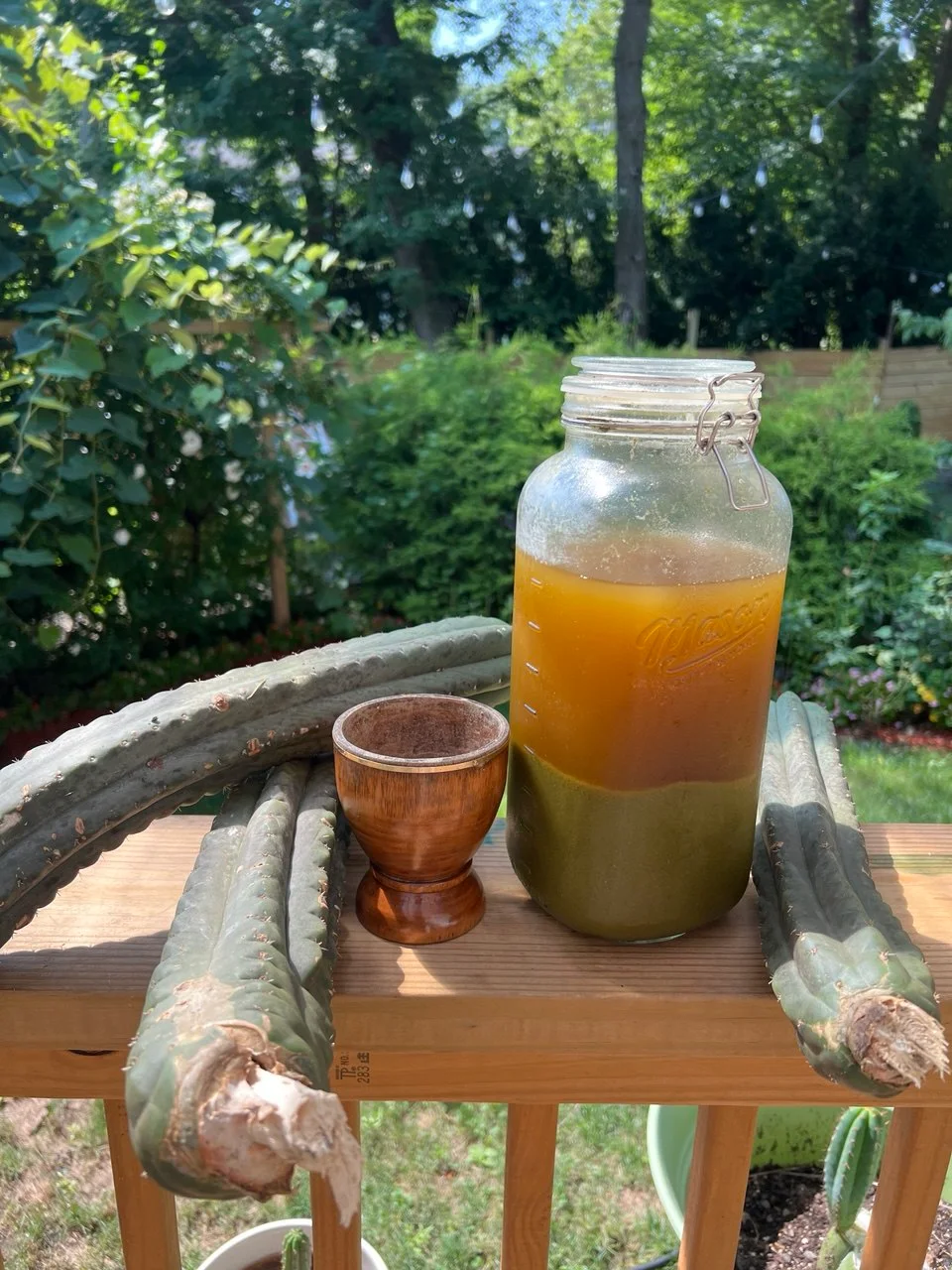
A cactus, and a relationship with place
Huachuma is a name used for the San Pedro cactus and the ceremonial traditions associated with it. Understanding the plant is a useful beginning, but understanding a particular ceremony also means learning about the people, places, and teachings around it.
The botanical name you will encounter here is Echinopsis pachanoi. Kew’s Plants of the World Online accepts that species and places its native range from southern Ecuador to Peru. Museo Larco’s plant catalogue, entry PL-28, identifies the same species as San Pedro or Andean cactus and describes its upright, branching growth.
Those records answer a botanical question. They do not tell us who may lead a ceremony, what a particular community teaches, or whether participation is appropriate for a particular person. A plant name is not a complete account of a tradition.
What historical objects can tell us
One tangible example of San Pedro’s place in ancient Peruvian imagery is a Nasca pottery drum in Museo Larco. The museum dates the object to its Florescent Epoch, AD 1–800, and interprets the star-shaped marks on the figure’s cheeks as representations of the cactus.
That is an interpretation of a particular object, not a description of every ancient ceremony. It offers a connection between the plant and religious imagery without proving that a gathering today follows an unchanged ritual from that period. Claims such as “the original ceremony” deserve more explanation than an archaeological photograph can provide.
It is possible to appreciate historical depth while remaining careful about what the evidence actually establishes.
The Andes are not a single tradition
“Andean” names a broad setting, not one uniform spiritual practice. The Smithsonian’s account of living Native traditions describes Quechua celebrations, communal work, offerings, and traditions that bring Inka and Catholic elements into relationship. Its examples locate spiritual life within communities and everyday responsibilities, rather than outside history.
This is helpful context, not a claim that every practice described by the Smithsonian is a Huachuma practice. When learning about a particular practitioner, ask which places, teachers, and communities inform their work. An Ecuadorian family history, a Peruvian teacher, and a contemporary gathering in the United States are different parts of a story; they should not be collapsed into a generic label.
Nor is Huachuma another name for ayahuasca. Our guide to their cultural differences explains why an Andean cactus tradition and Amazonian ayahuasca traditions need separate introductions.
Listening carefully to ceremonial language
You may encounter words such as “grandfather,” “teacher,” or “medicine” in a spiritual conversation. Ask the person using them what they mean. A term of respect can express a relationship with the plant; it should not be treated as a promise of a particular experience or as evidence of medical effectiveness.
The same care applies to titles. It is more informative to ask someone how they learned and how they remain accountable than to assume that a title has a universal meaning. Respectful curiosity does not require suspending your judgment.
Questions that make an introduction more useful
Before considering any gathering, you can ask:
- Which tradition are you describing? Ask for the names of relevant teachers and places, and which elements are the practitioner’s own adaptations.
- What does participation involve? Request a plain-language explanation, including whether any parts are optional and whether an educational conversation is available without ceremony.
- What are the boundaries? Ask about touch, privacy, photography, and the ability to decline or leave without pressure.
- How are health and legal questions handled? Spiritual leadership should not be confused with clinical qualifications or legal advice.
- What does reciprocity look like? Ask how relationships with teachers, communities, and the places involved are maintained beyond a single gathering.
These questions are an invitation to clarity, not a test of how much ceremonial vocabulary you know.
A next step can simply be learning
Read the Huachuma introduction and Oswal and his family’s story before deciding what you would like to ask. You can send a general question without making a commitment. The calendar is the place to check for published dates, not something to infer from an article or photograph.
This is a cultural introduction, not a recommendation to consume a psychoactive plant. Health concerns and medication questions belong with a qualified clinician; do not change prescribed treatment on the basis of ceremonial advice.
Sources & further reading
This guide was created with AI assistance using the sources above. It provides educational context, not Oswal’s personal teachings or professional advice. Read our editorial approach or send a question or correction.