
Traditions · The journal
Pachakuti Mesa Tradition and the Andean Mesa: What Is the Difference?
Understand the modern Pachakuti Mesa Tradition, its own account of its Peruvian influences, and why it should not represent every Andean altar.
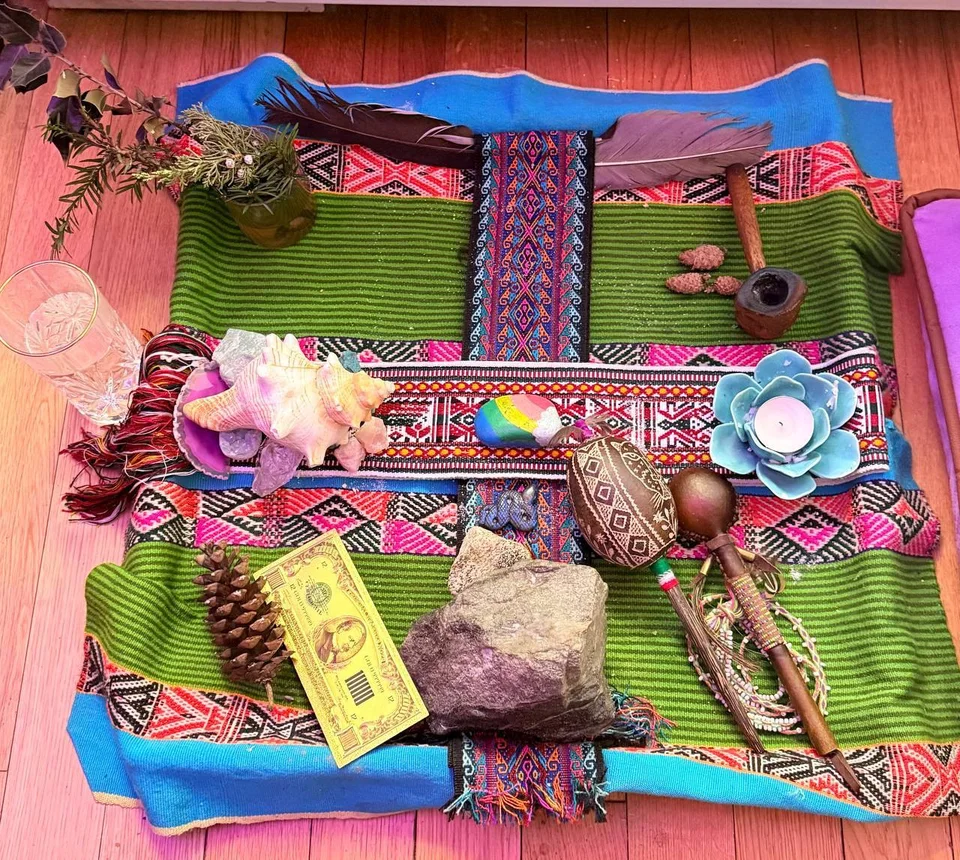
A named tradition is not the name for every altar
The Pachakuti Mesa Tradition is a modern, named system of cross-cultural spiritual practice associated with don Oscar Miro-Quesada and The Heart of the Healer. Its central focus is a particular kind of ceremonial altar, or mesa.
The Heart of the Healer’s own introduction identifies Miro-Quesada as the tradition’s originator and explicitly describes it as cross-cultural. That wording matters. “Pachakuti Mesa Tradition” is not a neutral umbrella term for all Andean altars, all Indigenous traditions, or every arrangement of meaningful objects on a cloth.
Keeping the names distinct makes it easier to appreciate the named tradition without asking it to represent communities and practices outside its scope.
What its own origin account says
The organization connects the tradition with Miro-Quesada’s learning from two Peruvian teachers: don Celso Rojas Palomino of Salas, described as a huachumero, and don Benito Corihuamán Vargas of Wasao, associated with an Andean Paqokuna tradition. It presents the sharing of those influences with Western audiences as part of the reason for developing the Pachakuti Mesa Tradition.
This is the organization’s account of its lineage. It is a useful primary source for how the tradition describes itself, not independent verification of every historical or spiritual claim on the page.
It also describes a process of bringing influences into relationship. That is different from claiming that the complete modern system existed unchanged in ancient Peru. The distinction does not require dismissing contemporary practice; it requires being accurate about what is contemporary and what it draws upon.
What the mesa is meant to do
In The Heart of the Healer’s description, the mesa is an altar for reflection, relationship, and personal spiritual practice. The organization interprets Pachakuti as “world reversal” and relates it to transformation. Here, that translation is being reported within the tradition’s own explanation, not offered as an exhaustive account of the word across languages and communities.
A helpful way to approach the altar is to ask what its objects mean within the teaching being shared. An object may look familiar while carrying a significance that is not visible in a photograph. Its position, story, or relationship to other objects may need explanation from the person responsible for the mesa.
The photograph on this page is therefore an introduction, not a diagram to reproduce. Owning similar objects does not by itself establish training, permission to teach, or a relationship with the people who carry a practice.
Where the wider Andean context belongs
The Smithsonian’s exhibition on living Andean traditions describes communal labor, offerings, festivals, and everyday responsibilities. It offers an important counterweight to viewing spirituality only through an altar’s appearance.
Its explanation of ayni as continuing reciprocity also gives a useful question for contemporary learning: how are relationships sustained beyond the session itself?
These Smithsonian materials do not document or endorse the Pachakuti Mesa Tradition. They provide wider cultural context. A reader should not mistake an institutional source about Andean life for certification of a modern school or any individual practitioner.
An altar should also not be confused with an offering. Our guide to despacho and ayni explores why those subjects can be related without being interchangeable.
Questions to ask about a mesa introduction
If you are considering a conversation, class, or gathering, ask:
- Which tradition is this? Is the teacher specifically sharing the Pachakuti Mesa Tradition, another named practice, or a personal combination?
- Where did the teaching come from? Ask who taught the practitioner and what kind of study or authorization they are claiming.
- What is being offered? An introductory conversation, personal practice, and a formal apprenticeship are different commitments. Ask which one is actually available.
- What may a visitor handle or photograph? Do not assume a publicly visible altar is open for touching, rearranging, or copying.
- What is expected afterward? Ask about any continuing responsibilities, costs, or commitments before agreeing to them.
Spiritual language need not prevent clear answers. A claim of training should be specific enough to check, and a meaningful practice should leave space to decline participation.
Learning about the people sharing it here
Start with our Pachakuti Mesa introduction and the family’s story. These pages introduce the subject and the people; they are not an independent certification of teaching credentials or a promise of results.
If you would like to understand how a particular teaching is approached at Huachuma Moonlight, ask directly. For anything date-specific, consult the calendar rather than treating an educational article as a scheduled workshop.
Sources & further reading
This guide was created with AI assistance using the sources above. It provides educational context, not Oswal’s personal teachings or professional advice. Read our editorial approach or send a question or correction.